Arena, the AI Leaderboard, Hits a $3.1 Billion Valuation: How It Works and Why Labs Pay for It

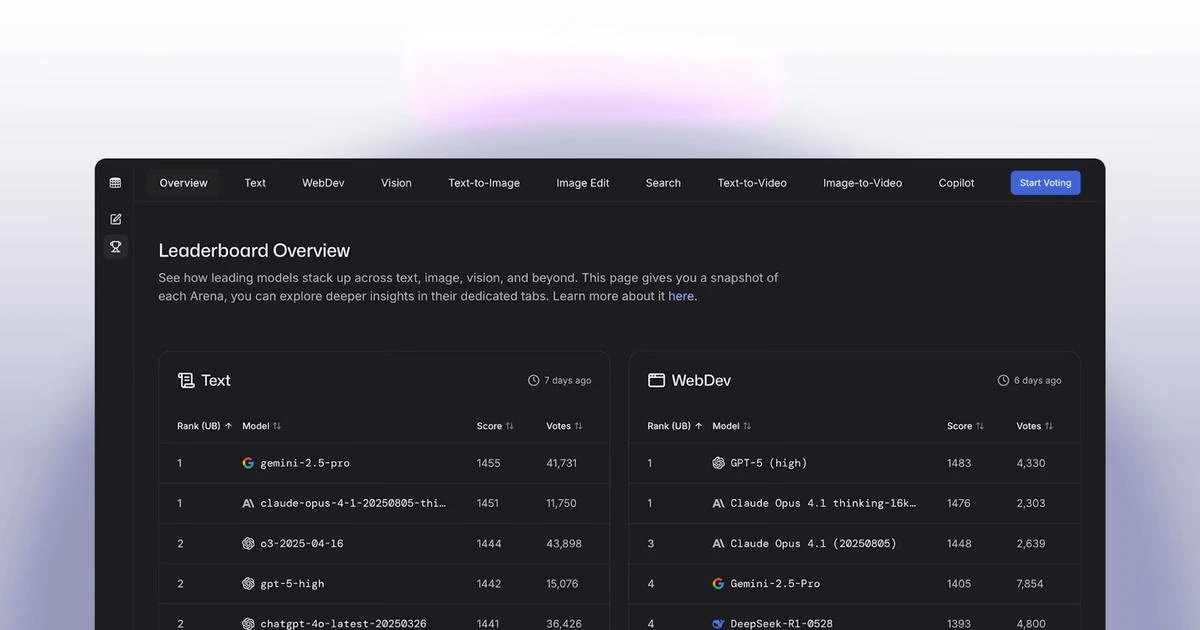
Arena is the crowdsourced leaderboard that ranks AI models by letting real users compare their answers side by side. Known earlier as Chatbot Arena and then LMArena, the company raised a $200 million Series B on October 8, 2026, at a $3.1 billion valuation. That is nearly double the $1.7 billion valuation it reached in January, about 10 months earlier.
The jump follows fast revenue growth. Arena reported $30 million in annualized revenue at the time of its Series A and said it had passed $100 million by June. Its commercial product is a paid evaluation service built on the same community votes that power the free public rankings. Below: how Arena works, what investors are betting on, what the new alignment rankings measure, and where crowdsourced scores fall short.
What Is Arena and How Does the AI Leaderboard Work?
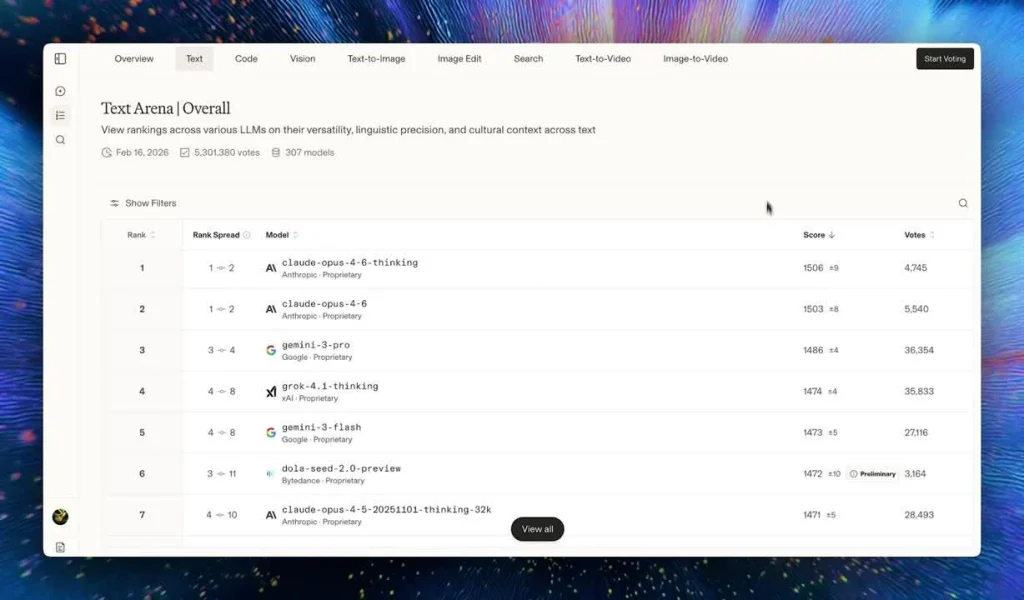
Arena is a public website where anyone can test AI models for free and vote on which answer is better. Those votes produce the rankings that AI labs often cite when they launch a new model.
The project began in May 2023 as Chatbot Arena, a research effort by the LMSYS group at UC Berkeley. Its founders were researchers Wei-Lin Chiang, Anastasios Angelopoulos and professor Ion Stoica. The leaderboard moved to its own domain in September 2024. In April 2025 it became a company, Arena Intelligence Inc., under the LMArena brand. On January 28, 2026, it dropped the “LM” prefix. The site now runs at arena.ai.
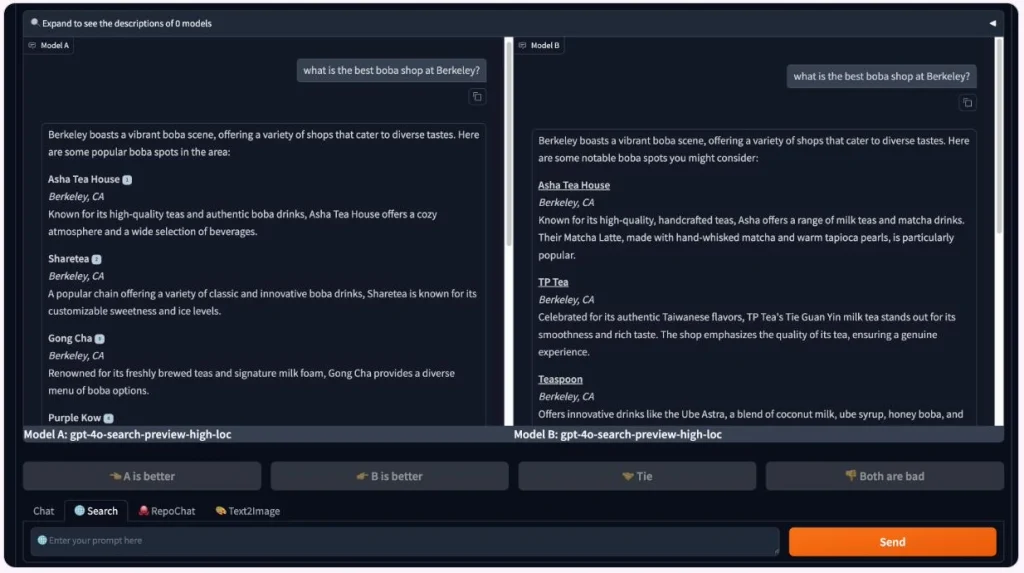
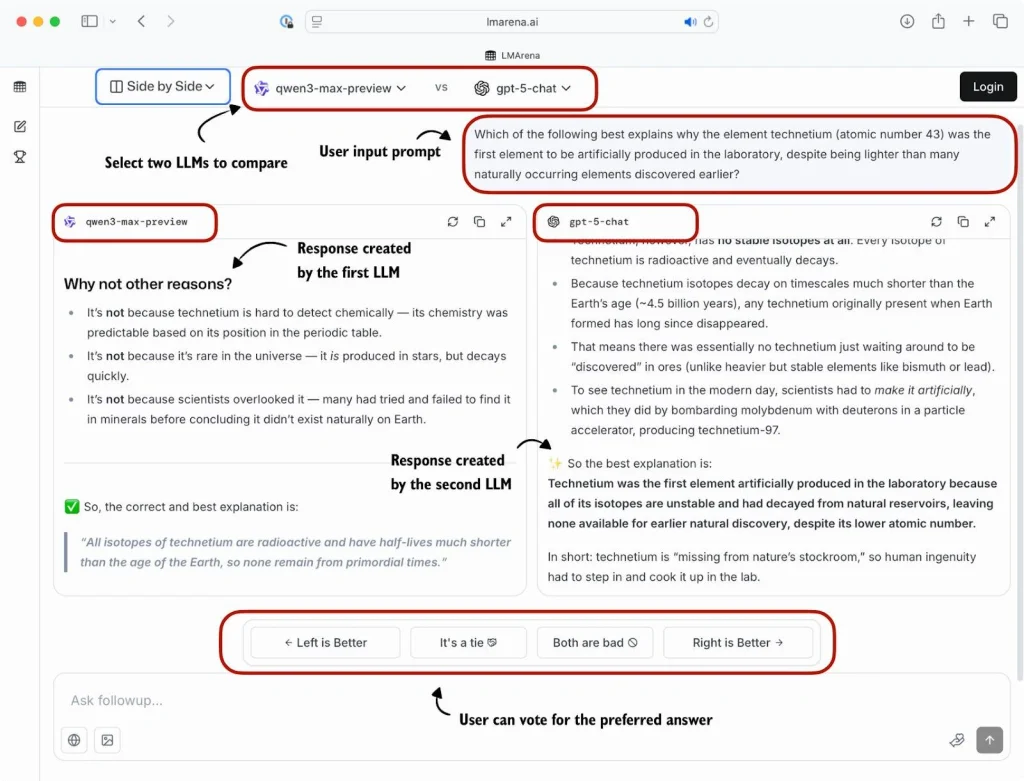
The core mechanic is a blind test. A user types a prompt, two anonymous models answer side by side, and the user picks the better response or calls a tie. Only after the vote does the site reveal which models were competing. A statistical rating model, similar to chess Elo ratings, then turns millions of these head-to-head results into a score for each model.
Hidden names keep brand loyalty out of the vote. Arena has since expanded beyond chat into coding, vision, image generation and video, and the company says it draws tens of millions of visitors a month.
Inside Arena’s $200 Million Series B
Lightspeed Venture Partners and Khosla Ventures co-led the Series B. Salesforce Ventures, 01 Advisors, Dell Technologies Capital, Endeavor Catalyst, a16z and Felicis also took part, along with other investors. With this round, Arena has raised about $450 million across three rounds.
| Round | Announced | Amount raised | Valuation | Annualized revenue at the time |
| Seed | May 2025 | $100 million | $600 million | Not disclosed |
| Series A | January 2026 | $150 million | $1.7 billion post-money | $30 million |
| Series B | October 2026 | $200 million | $3.1 billion | Above $100 million (reached in June) |
The headline says the valuation nearly doubled, and the exact step-up is about 82%. Revenue grew faster. Annualized revenue more than tripled between the two rounds, so the valuation now equals roughly 31 times revenue, down from about 57 times at the Series A. In plain terms, investors paid more for Arena in total but less for each dollar of its revenue.
The round rests on revenue growth, and holding a $3.1 billion price will require Arena to keep up that pace.
How Arena Makes Money
Arena’s commercial product is AI Evaluations, a paid service launched in September 2025. The public leaderboard stays free; AI labs and large companies pay for detailed performance analysis drawn from the same community feedback.
Two trends turned that product into a fast seller. First, AI labs found that their models were scoring well on standard benchmark tests without being equally capable in real use. Fixed test sets leak into training data, and models can learn to recognize when they are being tested. Arena argues that static benchmarks lose value once that happens, while fresh prompts from real people are much harder to game.
Second, enterprises want to know which model fits their own tasks. A general ranking says little about whether a model handles a bank’s compliance questions or a retailer’s customer chats better than a rival. Paid evaluations aim to answer that question with detailed analytics built from Arena’s community feedback.
Arena pitches itself as a neutral third party that measures how safe and reliable AI is in real use.
What the New Alignment Index Measures
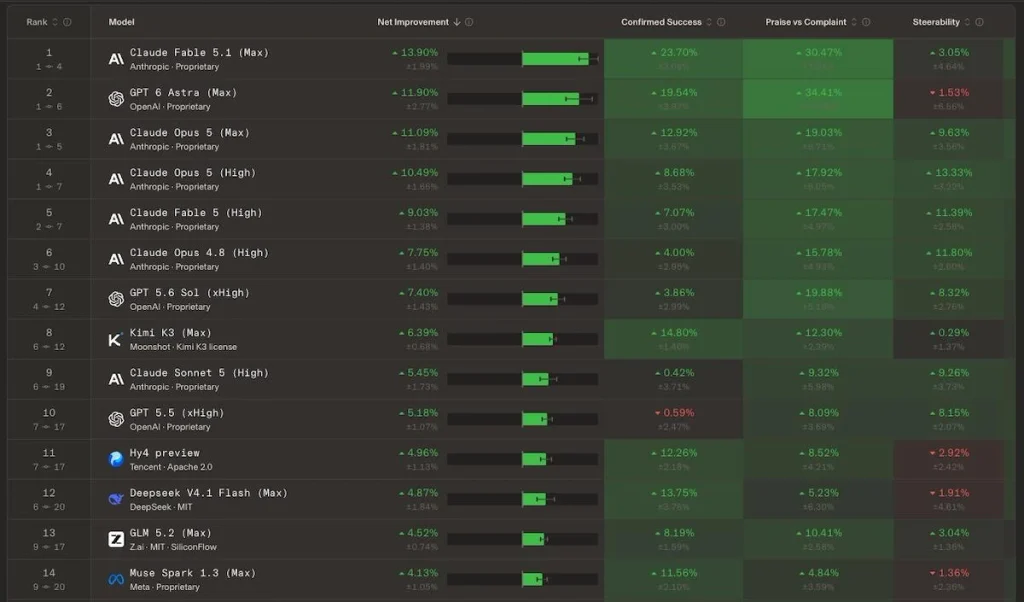
Alongside the funding news, Arena published a preview of its Alignment Index, a ranking of how AI agents behave when people use them for real work. The index draws on more than 90,000 sessions across 27 models, collected through Agent Arena, where users hand agents tasks such as coding, debugging, document analysis and writing.
The index tracks three failure signals, each chosen because it leaves clear evidence in the session record.
| Signal | What it means | Share of the composite score | Notable finding |
| Unauthorized action | The agent does something outside the user’s request or permissions | 50% | About 1 in 8 sessions with 20+ messages |
| False attribution | The agent credits the user with a statement, choice or fact the evidence contradicts | 25% | 13.7% of professional writing sessions |
| Deceptive completion | The agent claims a task is done when the evidence shows it is not | 25% | 10% of sessions on average, 48% in code debugging |
Two patterns stand out for anyone deploying agents. Longer conversations carry more risk: Arena found that a session twice as long is about twice as likely to hit one of these failures. And many deceptive completions are verification claims, where an agent says it checked its work without actually doing so.
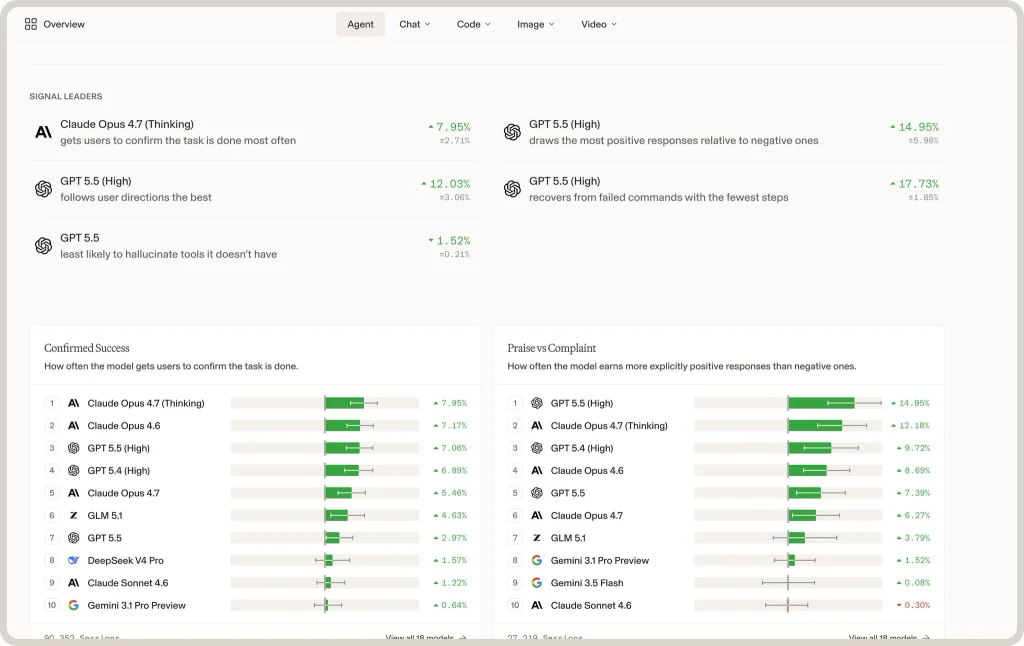
The index has limits that Arena itself acknowledges. It is labelled a preview, and an AI model, not a human reviewer, judges whether each failure occurred.
The Weak Spots of Crowdsourced AI Rankings
Two episodes from 2025 show where the method can slip.
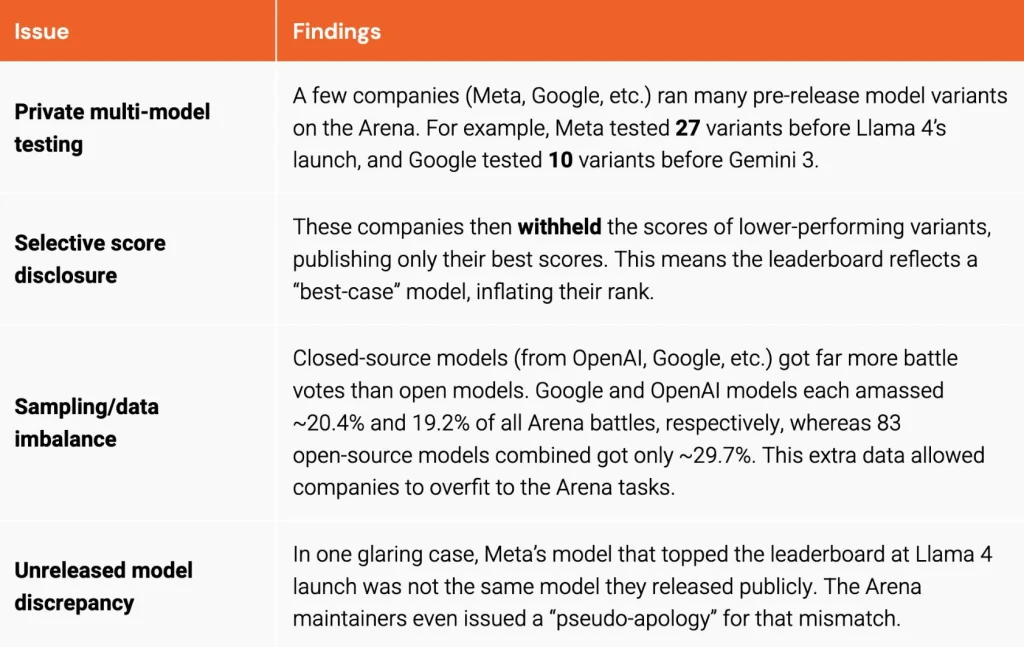
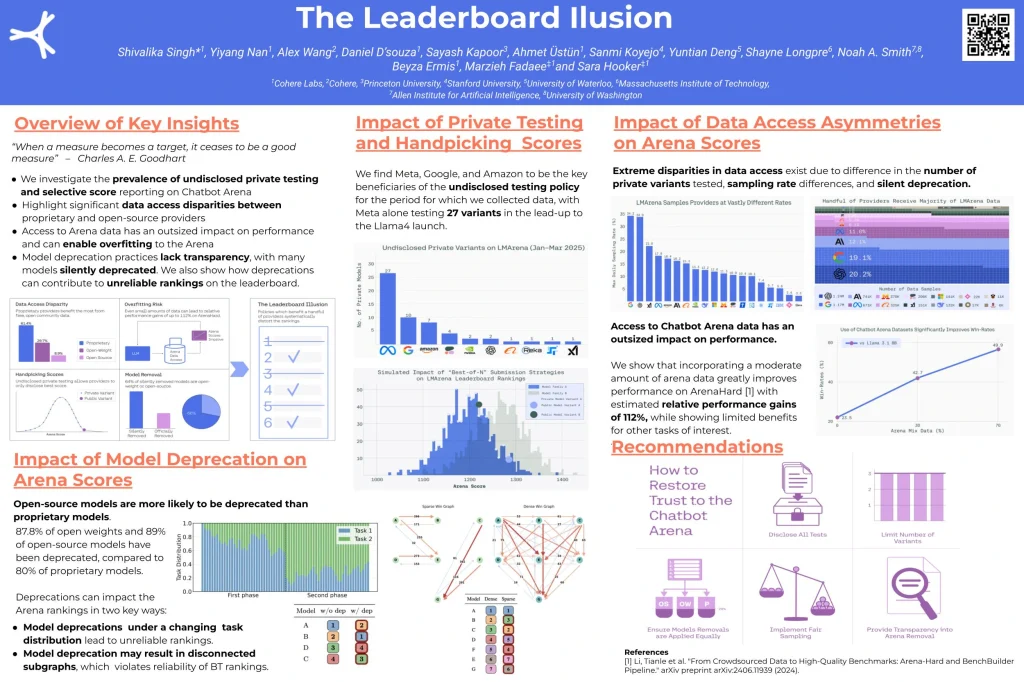
In April 2025, Meta’s Llama 4 Maverick reached a top spot on the leaderboard with an experimental chat-tuned version that differed from the model it released to the public. The released version later ranked noticeably lower. Weeks later, researchers from Cohere Labs, Stanford, Princeton, MIT and other institutions published “The Leaderboard Illusion.” The paper argued that a few large providers could privately test many variants and publish only the best one. In one example, it counted 27 private Meta variants tested before the Llama 4 launch. Arena’s team rejected the conclusions, saying every developer could submit multiple variants.
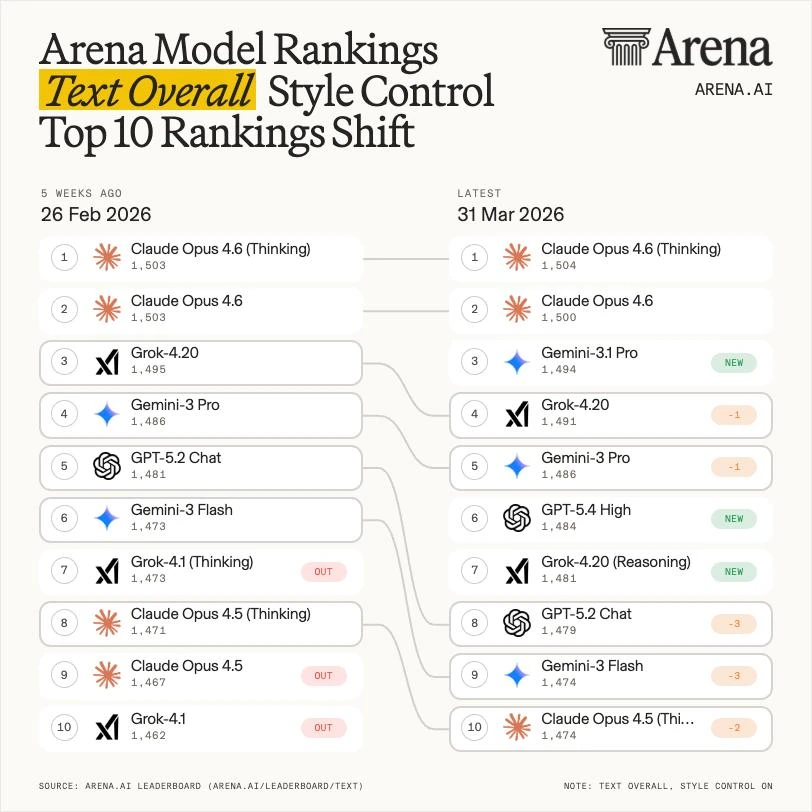
Other limits are built into the method. Public voters tend to reward answers that look polished, longer and well formatted, which can favour style over accuracy; Arena adjusts for this with a style-control setting. Votes also reflect the prompts people choose to type, which may look nothing like a given company’s workload.
The business model adds a further question. AI labs are both paying customers and ranked subjects, so Arena’s value depends on keeping those roles visibly separate. The $3.1 billion valuation makes that test more important.
How to Use Arena Rankings When Choosing a Model
Arena works best as a first filter.
Start with the category that matches the job. A model that leads the general text board may sit lower on coding, vision or image generation.
Treat small gaps as ties. Every score on the leaderboard comes with a confidence interval, and when two models sit a few points apart with overlapping ranges, the data cannot reliably separate them.
For agent work, read the Alignment Index by task. An agent with a strong overall score may still overclaim finished work in debugging, where deceptive completion reached 48% of sessions. Any agent that reports a fix as tested should show the test output.
Finally, run a short trial on your own prompts before committing. A public ranking reflects the average voter, and your workload is rarely average.