

Is Cryptocurrency Legal in India? What Buyers and Holders Should Know
Yes, cryptocurrency is legal to buy, hold and trade in India, but it does not have the same status as the Indian rupee. The government has not imposed a general ban on private cryptocurrencies such as Bitcoin and Ethereum. However, it does not recognise them as legal tender or provide the same regulatory protection available to traditional financial products.

As of November 16, 2026, India’s approach combines cryptocurrency taxation, anti-money laundering requirements and transaction reporting rules. Crypto gains are subject to a special 30% tax, qualifying transfers attract 1% TDS, and service providers conducting specified virtual digital asset activities must register with the Financial Intelligence Unit of India (FIU-IND).
For investors, the distinction matters. You can legally own cryptocurrency, but you must understand the tax obligations, platform compliance requirements and risks associated with an asset class that remains outside a comprehensive financial regulatory framework.
Is cryptocurrency legal in India or completely banned?
Cryptocurrency is not subject to a blanket prohibition in India. Individuals can generally purchase, sell, hold and transfer digital assets, including Bitcoin (BTC), Ethereum (ETH) and other virtual digital assets (VDAs), subject to applicable laws.
The important distinction is between legality and official recognition.

The Indian government does not recognise privately issued cryptocurrencies as legal tender. This means Bitcoin cannot replace the rupee as India’s officially recognised currency. A business, shopkeeper or individual is not legally required to accept cryptocurrency when settling a payment or debt.
The current position can be understood through three categories:
| Activity | Legal position in India |
| Buying Bitcoin and other cryptocurrencies | Generally permitted |
| Holding crypto in a personal wallet | Generally permitted |
| Selling or exchanging crypto | Permitted, subject to tax rules |
| Trading through an FIU-IND-compliant platform | Permitted |
| Using cryptocurrency as official legal tender | Not recognised |
| Operating a covered crypto service without FIU registration | Violation of applicable PMLA requirements |
| Hiding taxable crypto income | Tax non-compliance |
India classifies cryptocurrency within the broader category of virtual digital assets for taxation. This category also covers qualifying NFTs and other specified digital assets.
However, the classification does not automatically make every token a regulated financial product. A particular token, investment arrangement or crypto-related business may also fall under other laws depending on its structure and activities.
Another important distinction concerns the Digital Rupee (e₹). Unlike Bitcoin, the Digital Rupee is issued by the Reserve Bank of India (RBI). It represents sovereign currency in digital form and carries legal tender status.
Why the Supreme Court changed India’s cryptocurrency position

The current legal environment is closely connected to a major Supreme Court judgment delivered on March 4, 2020.
Before that decision, the RBI had issued a circular in April 2018 restricting banks and other regulated financial institutions from providing services to businesses dealing in virtual currencies.
The restriction created serious difficulties for cryptocurrency exchanges. Although it did not directly criminalise individual ownership, businesses found it difficult to maintain banking relationships, process deposits and withdrawals, or operate normally.
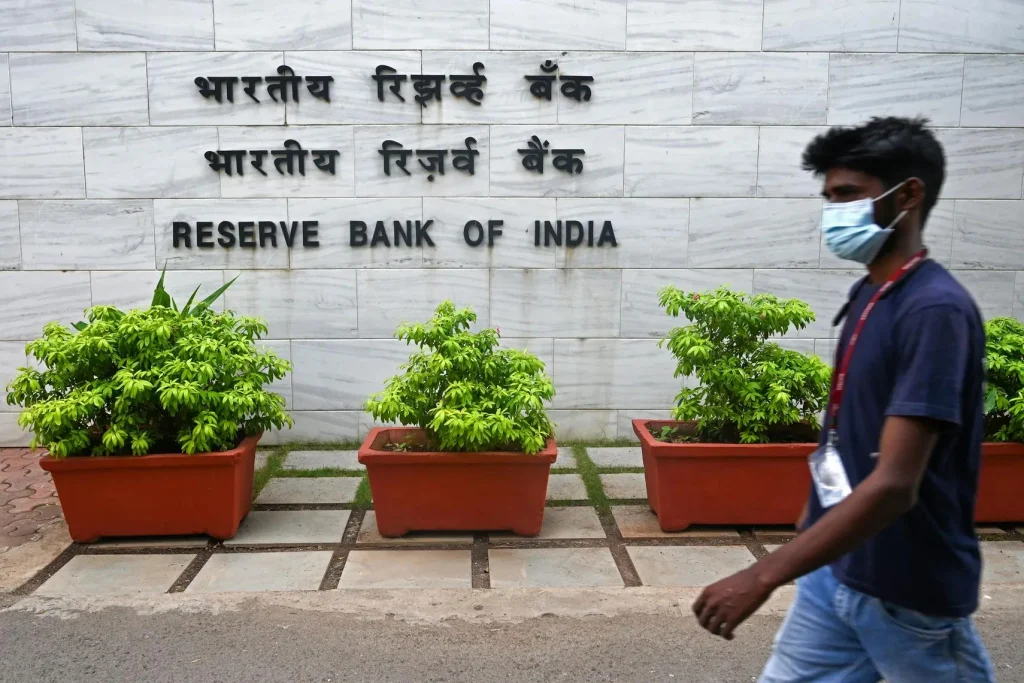
The Supreme Court subsequently set aside the RBI circular in the case of Internet and Mobile Association of India v. Reserve Bank of India.
The decision was important because it removed the banking restriction that had severely affected the Indian cryptocurrency industry.
However, there is a common misunderstanding about the judgment.
The Supreme Court did not declare Bitcoin legal tender or establish a complete legal framework for cryptocurrencies. It struck down the particular RBI restriction. Other applicable laws, including tax and anti-money laundering legislation, continued to apply.
The regulatory framework developed further through several important changes:
- 2018: The RBI introduced restrictions on banking services for virtual currency businesses.
- 2020: The Supreme Court set aside the RBI’s 2018 circular.
- 2022: India introduced specific taxation provisions for virtual digital assets, including the 30% tax and 1% TDS.
- 2023: Specified VDA service providers were brought under the Prevention of Money Laundering Act (PMLA).
- 2026: The new Income-tax Act and updated transaction-reporting requirements strengthened the tax compliance framework.
This history explains why cryptocurrency can be traded in India without being recognised as official money.
FIU-IND registration: what cryptocurrency investors need to know
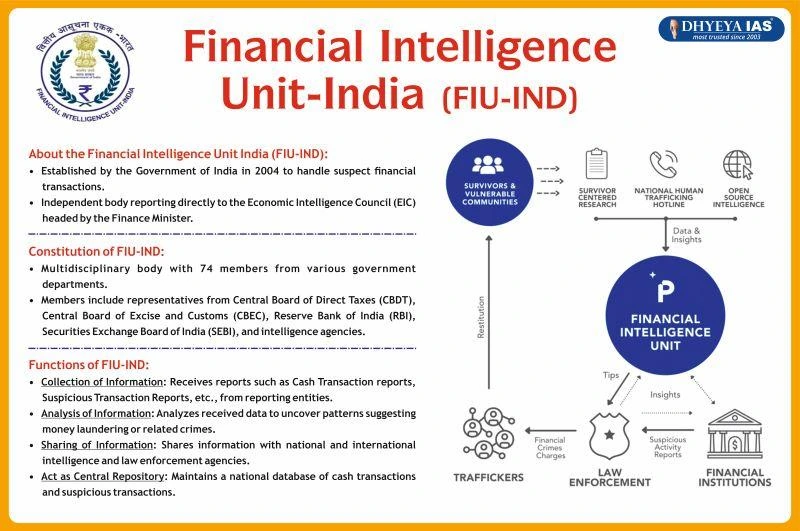
One of the most important developments in India’s crypto regulation is the role of the Financial Intelligence Unit of India.
FIU-IND is responsible for overseeing anti-money laundering and counter-terrorism financing compliance among specified virtual digital asset service providers.
Under the Prevention of Money Laundering Act, 2002, the registration requirement applies to businesses carrying out covered activities on behalf of other people.
These activities include:
- Exchanging cryptocurrency for traditional currencies such as INR.
- Exchanging one cryptocurrency for another.
- Transferring virtual digital assets.
- Safekeeping or administering cryptocurrency and related control instruments.
- Providing specified financial services connected with the issuance or sale of virtual digital assets.
The requirements also apply to qualifying overseas service providers, regardless of whether they have a physical presence in India.
Does every cryptocurrency investor need FIU registration?
No. The registration obligation applies to the covered service provider, not to an individual simply because that person owns Bitcoin or Ethereum.
This distinction is important. Using a platform that has not fulfilled its registration obligations does not automatically make an individual’s cryptocurrency ownership a criminal offence. However, the platform itself may face enforcement action under the PMLA.
The FIU-IND guidelines updated on January 8, 2026, also establish detailed requirements covering customer identification, KYC verification, transaction monitoring, record-keeping and suspicious transaction reporting.
Before using an exchange, investors should check its actual registration status. An application awaiting approval is not the same as completed registration. Formal registration follows the prescribed verification process and results in an FIU Reporting Entity ID.
There is another limitation worth understanding: FIU-IND registration is not a guarantee that an exchange is financially secure or that its cryptocurrency products have been approved as investments by SEBI.
Cryptocurrency tax rules in India in 2026

Taxation is one of the most important legal responsibilities for Indian cryptocurrency investors. India introduced a special tax regime for virtual digital assets in 2022, and the framework continues under the Income-tax Act, 2025, which came into force on April 1, 2026.
The main rules remain strict: profits from transferring cryptocurrency are taxed at a special rate of 30%, with applicable surcharge and health and education cess.
1. The 30% cryptocurrency tax
Section 194 of the Income-tax Act, 2025, establishes the special tax treatment for income from transferring virtual digital assets.
The calculation allows the cost of acquisition to be deducted, but ordinary trading expenses and other allowances are generally not deductible against this income.
There is another restriction that investors should understand: losses from cryptocurrency transfers cannot be adjusted against other income or carried forward to subsequent tax years.
For example, imagine an investor purchases Bitcoin for ₹1,00,000 and later sells it for ₹1,50,000.
The taxable gain is ₹50,000 before applicable surcharge and cess. At the special 30% rate, the basic tax would be ₹15,000.
The rule can become particularly unfavourable for active traders. Someone who makes a profit on one cryptocurrency and a loss on another cannot simply combine both results to reduce the taxable VDA income.
2. The 1% TDS requirement
India also applies Tax Deducted at Source (TDS) to qualifying cryptocurrency transfers.
Under Section 393 of the Income-tax Act, 2025, the applicable TDS rate is 1% of the consideration for transferring a virtual digital asset.
The annual thresholds are:
| Category of payer | TDS exemption threshold |
| Specified individual or HUF | ₹50,000 |
| Other persons | ₹10,000 |
A specified person generally means an individual or Hindu Undivided Family meeting the prescribed business turnover or professional receipts conditions, or having no business or professional income.
The important difference is that TDS is calculated on the transaction consideration, not simply on the investor’s net profit.
TDS is not an additional final 1% cryptocurrency tax. It is a tax credit that can be claimed against the taxpayer’s final liability, subject to the applicable rules.
Frequent traders should pay particular attention to this requirement because repeated transactions can create a substantial cash-flow impact.
3. Reporting cryptocurrency transactions
The Income-tax Act, 2025, introduced a specific reporting obligation under Section 509.
Prescribed reporting entities must provide information about relevant crypto-asset transactions to the Income Tax Department. The Income-tax Rules, 2026, establish the reporting and due diligence requirements.
The Finance Act, 2026, also introduced penalties for reporting entities that fail to meet their obligations:
- ₹200 per day for failure to submit the prescribed statement within the required period.
- ₹50,000 for specified cases involving inaccurate information or failure to fulfil due diligence requirements.
These penalties concern persons required to submit the reporting statements. They should not be confused with automatic penalties imposed on every individual cryptocurrency holder.
Investors should nevertheless maintain their own records, including purchase prices, sale proceeds, transaction dates, exchange statements, wallet transfers and TDS details.
The introduction of more extensive transaction reporting means that assuming cryptocurrency activity is invisible to tax authorities is increasingly risky.
Are foreign cryptocurrency exchanges legal for Indian users?
Foreign cryptocurrency exchanges require additional attention.

The fact that a platform operates outside India does not automatically exempt it from Indian compliance requirements. FIU-IND’s activity-based registration framework can apply to service providers operating from overseas when they conduct the specified activities covered by Indian anti-money laundering rules.
Investors should distinguish between three separate questions:
- Is the exchange registered with FIU-IND where registration is required?
- Does the transaction comply with applicable Indian tax and reporting obligations?
- Do any overseas transfers or foreign payment arrangements raise additional FEMA requirements?

The Foreign Exchange Management Act (FEMA) remains relevant to applicable cross-border financial transactions and overseas remittances. Cryptocurrency ownership does not create a general exemption from foreign-exchange rules.
Peer-to-peer (P2P) transactions also require care. Trading directly with another person does not remove tax obligations or eliminate the need to maintain transaction records.
For anyone using an international exchange, checking the platform’s compliance status and understanding the banking route is more important than simply comparing trading fees.
What are the risks of owning cryptocurrency in India?
Legal permission does not mean that cryptocurrency investments are protected in the same way as bank deposits, mutual funds or listed shares.
India’s current framework concentrates heavily on taxation and financial crime prevention. It does not provide a comprehensive investor-protection regime specifically for cryptocurrency markets.
There are several risks worth considering.
Exchange failure: If a cryptocurrency platform becomes insolvent or suspends withdrawals, investors may struggle to recover their assets. FIU-IND registration does not guarantee that customer funds will be protected.
Wallet security: Investors using self-custody wallets control their own private keys. Losing those keys or exposing a recovery phrase can result in permanent loss of access.
Market volatility: Bitcoin and other cryptocurrencies can experience significant price movements within short periods. A legally permitted investment can still result in substantial financial losses.
Fraud and money laundering: Fake investment schemes, impersonation scams, suspicious P2P transactions and fraudulent exchanges can create legal and financial problems.
Regulatory uncertainty: The RBI has maintained a restrictive position towards privately issued cryptocurrencies and has continued to raise concerns about financial stability and monetary sovereignty. The broader government framework, meanwhile, continues to apply taxation and AML requirements.
As of November 2026, India has not established a comprehensive standalone cryptocurrency regulatory regime. Future legislation could change the rules governing exchanges, investors and digital asset businesses.
How to buy cryptocurrency legally in India
For individuals who want to enter the cryptocurrency market, the first priority should be compliance rather than chasing a particular coin or exchange.
A sensible process involves the following steps:
- Check the exchange: Verify whether the platform is formally registered with FIU-IND when its activities require registration.
- Complete KYC: Provide the required identity and tax information, including PAN details.
- Use a documented payment method: Keep records of bank transfers and deposits used to purchase cryptocurrency.
- Understand custody: Decide whether to keep assets on an exchange or transfer them to a personal wallet. Self-custody requires careful private-key management.
- Maintain transaction records: Save purchase confirmations, sale records, wallet histories and TDS statements.
- Report taxable income: Calculate VDA income and follow the income-tax return requirements applicable to the relevant tax year.
Investors should also remember that cryptocurrency-to-cryptocurrency exchanges and other forms of asset transfers can have tax implications. Buying a coin and simply holding it is different from transferring or disposing of it.
Frequently asked questions about cryptocurrency legality in India

Is Bitcoin legal in India in 2026?
Yes. Bitcoin is not subject to a general nationwide ban. Individuals can generally purchase, hold and sell it, provided they comply with applicable taxation and other laws. However, Bitcoin is not legal tender.
Can I go to jail for owning cryptocurrency in India?
Simply owning Bitcoin or another cryptocurrency is not, by itself, a criminal offence under a general crypto ownership ban. However, cryptocurrency transactions connected with money laundering, fraud, terrorist financing or other prohibited activities can attract criminal consequences under applicable legislation.
Can Indian shops accept Bitcoin as payment?
Bitcoin is not officially recognised as legal tender. Businesses are not required to accept it. Any private arrangement involving cryptocurrency should be assessed separately for its contractual and tax implications.
Will India ban cryptocurrency in the future?
A future ban or tighter regulatory framework cannot be ruled out. The RBI has advocated a restrictive approach, but policy discussions and institutional recommendations do not become law automatically. Investors should distinguish official legislation and notifications from proposals or public statements.
What Indian cryptocurrency investors should do next
The practical answer to whether cryptocurrency is legal in India is yes, but the legal position comes with important conditions.
Individuals can generally buy, hold and trade digital assets. They must also account for the 30% tax on qualifying gains, the 1% TDS framework and the reporting requirements that apply to cryptocurrency service providers.
The most sensible approach is to use a compliant exchange, maintain complete transaction records and understand the tax treatment before making transfers.
India’s cryptocurrency framework is still evolving. Anyone investing in Bitcoin, Ethereum or other digital assets should monitor changes to the Income-tax Act, PMLA requirements and future government policy rather than assuming that today’s rules will remain unchanged.
This article is for educational purposes and does not constitute legal, tax or investment advice. Individual circumstances, residency status and transaction structures can affect the applicable rules. Consult a qualified Indian tax professional or lawyer when making decisions involving significant cryptocurrency holdings.